

Zen-Wu Y-2 Chisel
A new generation of 'super tools?'

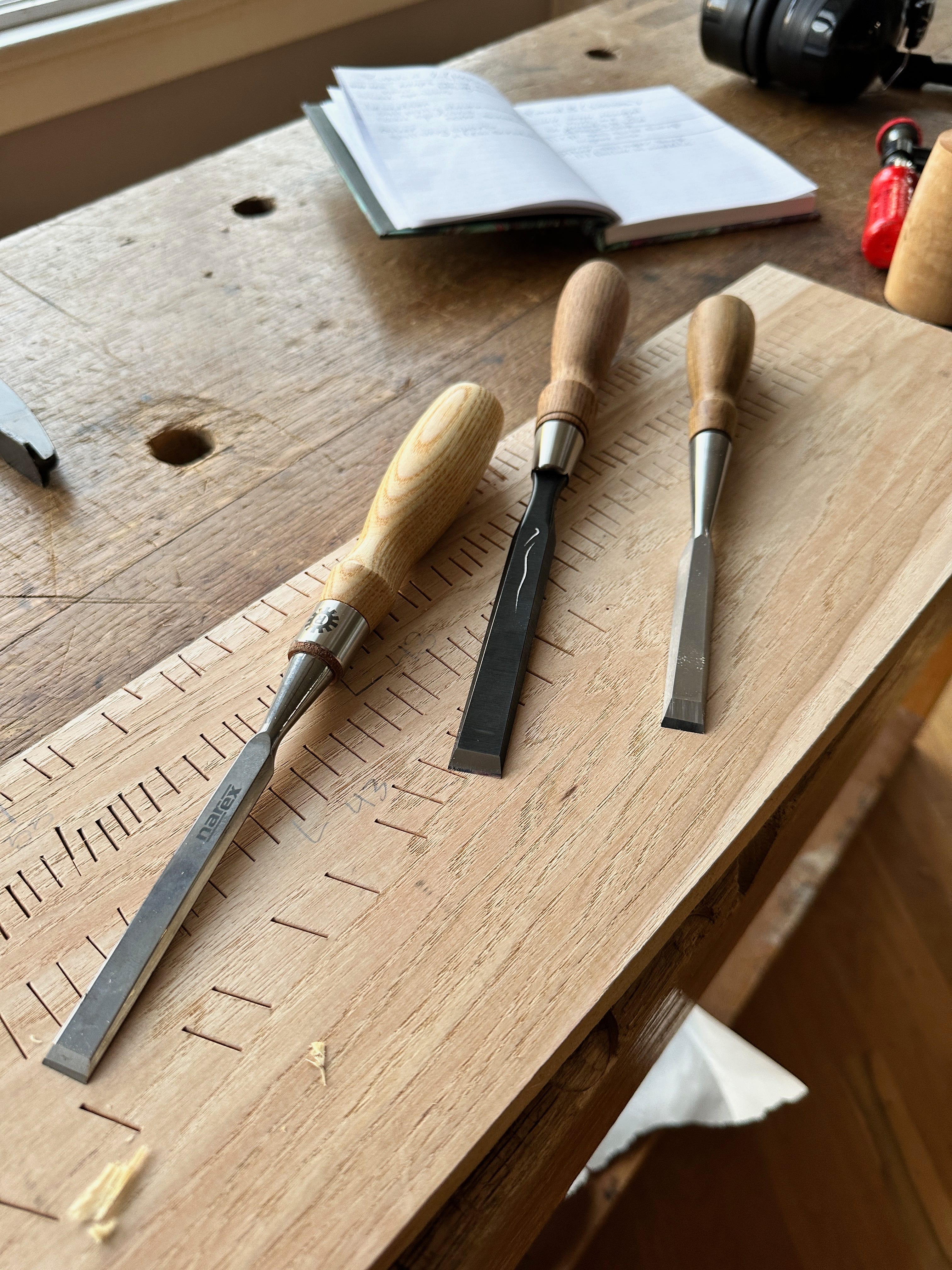
Around here, we don’t get turgid/excited/sweaty about tools that promise long edge life. We are all good at sharpening stuff here; so as long as the tool keeps a decent edge, I’m much more concerned about its comfort. Especially when it comes to chisels.
But so many people have praised the Zen-Wu Y-2 chisel that we decided we had to check it out for ourselves. Over the years, I’ve seen many claims of crazy-good edge retention turn out to be mass Internet delusions. So I purchased a Y-2 chisel in the 1/2" size. We paid full price. It shipped from overseas and took about three weeks to get here.
The chisel comes lapped on the back with a more-than-decent factory edge. Most woodworkers wouldn’t bother sharpening it before putting it to work. A few other notes: The blade has an oxide coating that echoes traditional Japanese and blacksmith-made chisels. The long sides of the blade have been relieved for comfort (thank you, Zen-Wu).
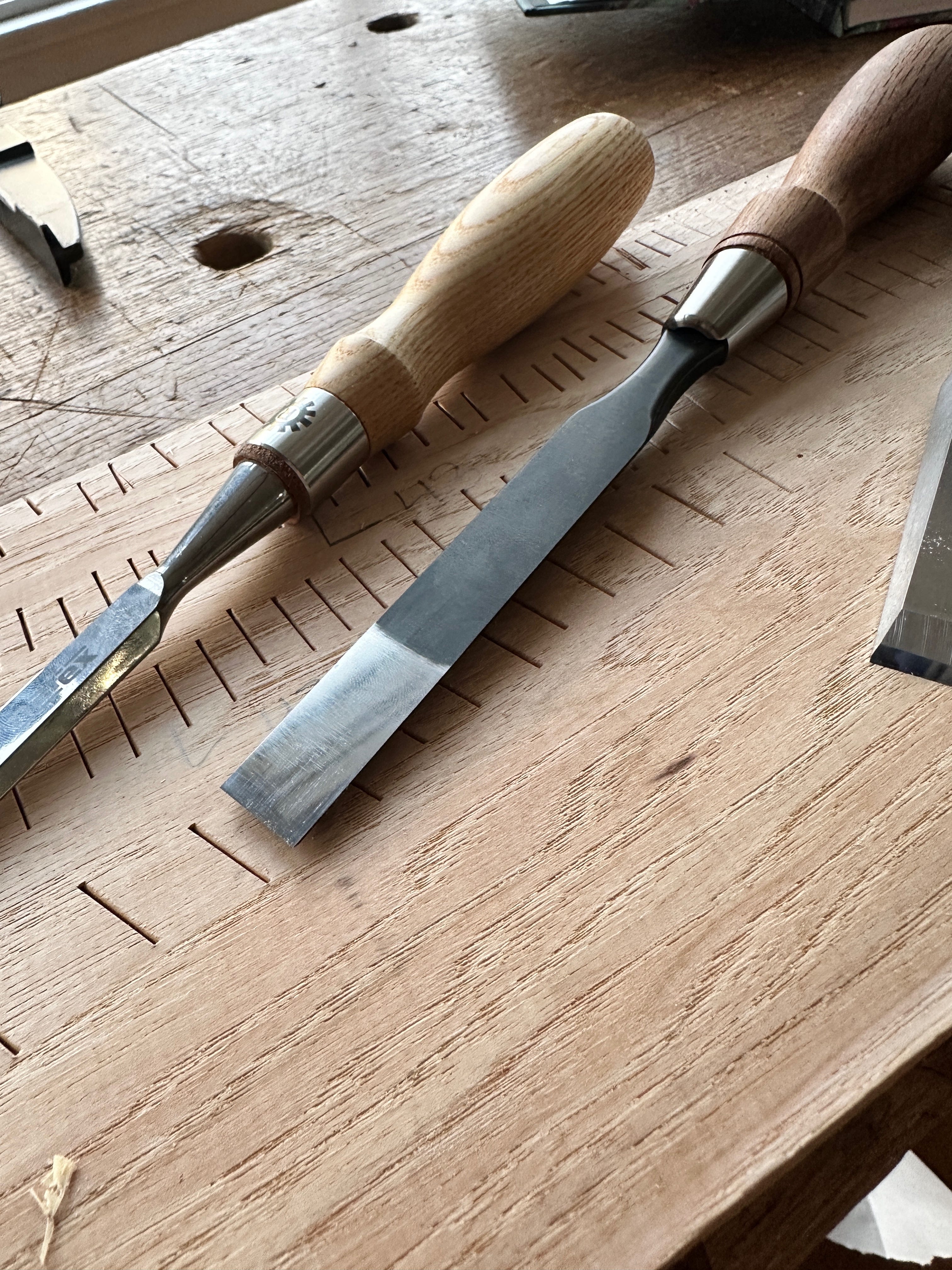
The handle is oak, nicely finished and not too slick in the hand. Overall, the fit and finish of the chisel is on par with other premium chisels, such as Lie-Nielsen and the Veritas PM-V11 chisels.
The chisel is 10-1/2" long. That’s long. I prefer shorter Stanley 750-style chisels. I started woodwork in the 1990s with Marples Blue Chips (another long chisel). After I switched to 750s, I stayed with the format. My bias likely comes from the fact that I chop a lot of dovetails. Long chisels are heavy and tiring. In the Zen-Wu’s favor, however, is the fact that its handle is shaped like the 750’s handle.
But you aren’t here to hear about handle profiles and balance. You want to know about the Zen-Wu’s edge retention. So here’s what I did. I sharpened up the Zen-Wu with a 35° secondary bevel using my stones. Then I sharpened up a Narex Richter chisel and a Lie-Nielsen A2 chisel. All the tools were 1/2" wide and sharpened to the same polish by the same person in the same day.
Then I turned them over to Katherine to whack them into a particularly hard hickory board from our scrap bin and record her findings. I didn’t tell Katherine which chisel we were testing. Or even what we were looking for. So here I’ll turn the storytelling over to her.
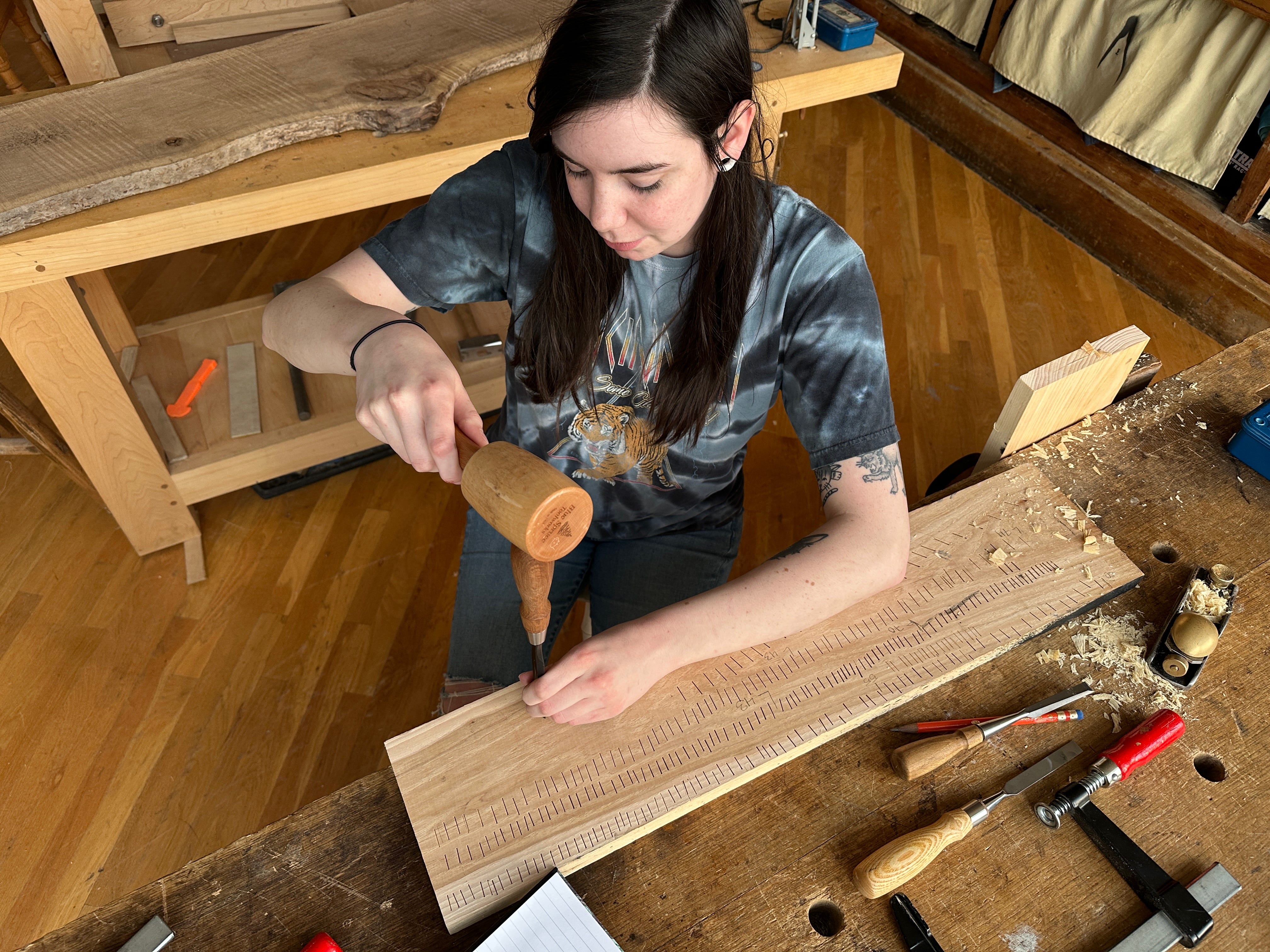
The Apprentice’s Bang-bang Show
I was tasked to test three different chisels to see which is superior. In total I made 600 marks, three whacks each, which totals to 1,800 bonks on a piece of hickory. In the first round of 50, I found the Lie-Nielsen chisel to be the most comfortable in my hand. It didn’t seem too top-heavy like the other two, and I liked the flat end on its handle for contact with the mallet. At the end of my test, the edge of the Lie-Nielsen chisel was still as sharp as when I started.
Next I tested the Narex. It was quickly not my favorite chisel – too heavy at the top and an awkward length of metal for my hand. I felt my hand cramping up the most when using this chisel. The long edges of the blade that my hands were touching were also too sharp. The tool’s cutting edge was noticeably rounded after the first 50 chops, and it got more rounded as I went.
The Zen-Wu stayed crazy sharp through the experiment. It grazed my finger, making me rush to the sink before I bled on this nice chisel. It still felt a bit top heavy for me, but not as much as the Narex did. My grip felt natural with this chisel throughout the process as well, something I did not experience with the Narex.
Keep reading with a 7-day free trial
Subscribe to Never Sponsored to keep reading this post and get 7 days of free access to the full post archives.