

Tools for Gentle Deconstruction

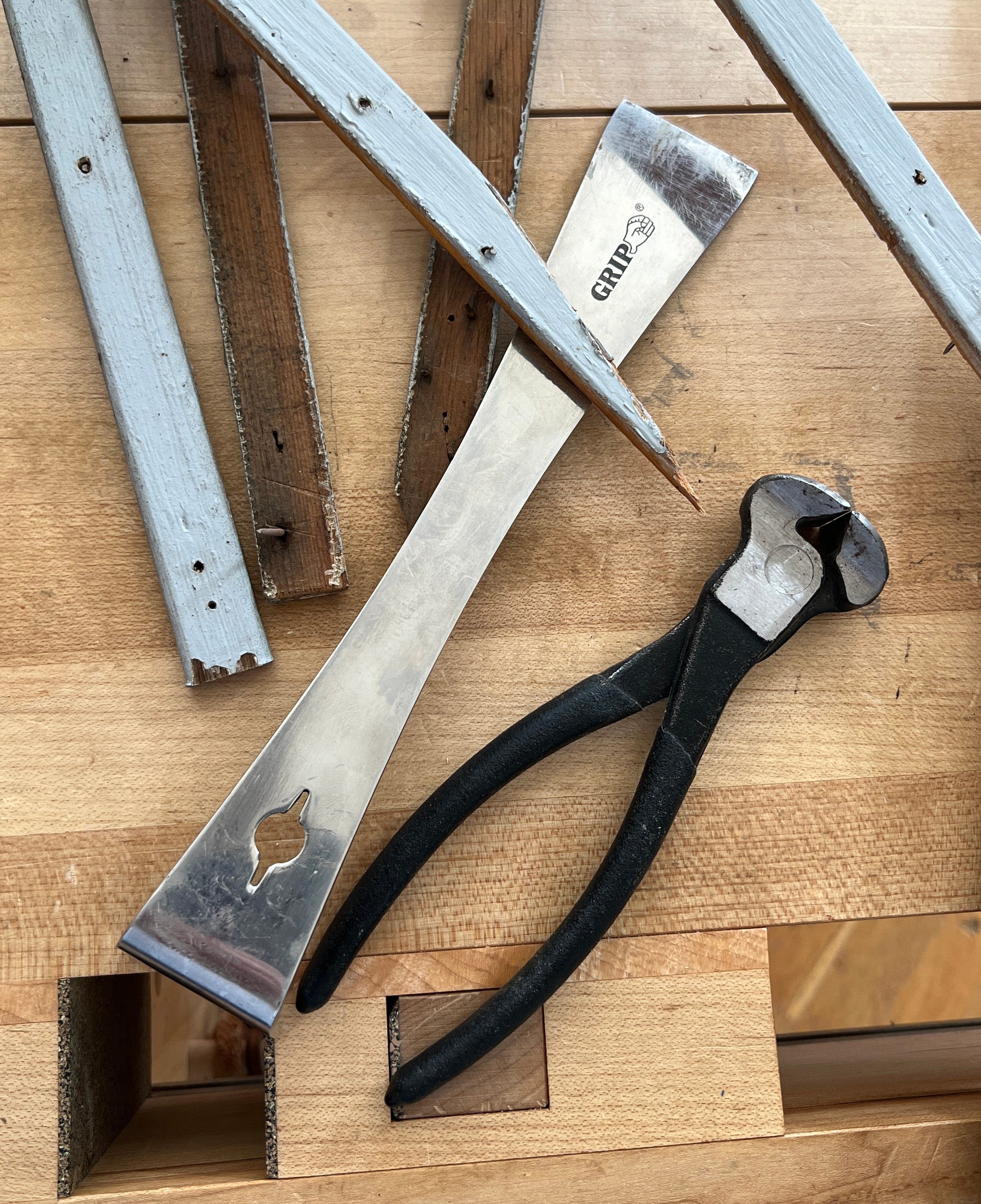
Pressure washers and small, 100-year-old thin wooden mouldings are not a great combination.
Unfortunately, the 1/4"-thick cross bars on my screen door did not survive the painter’s prep (I told them not to go near the cast-plaster capitals of my porch columns with the pressure washer, and they did not. But I did not think to warn them away from the screen doors.1 ).
But fortunately, I needed something to write about for Never Sponsored today, so these tools, a thin pry bar and end nippers, are pulling double duty. By the end of the day, I’ll have this post written and I’ll have my screen door insert fixed.
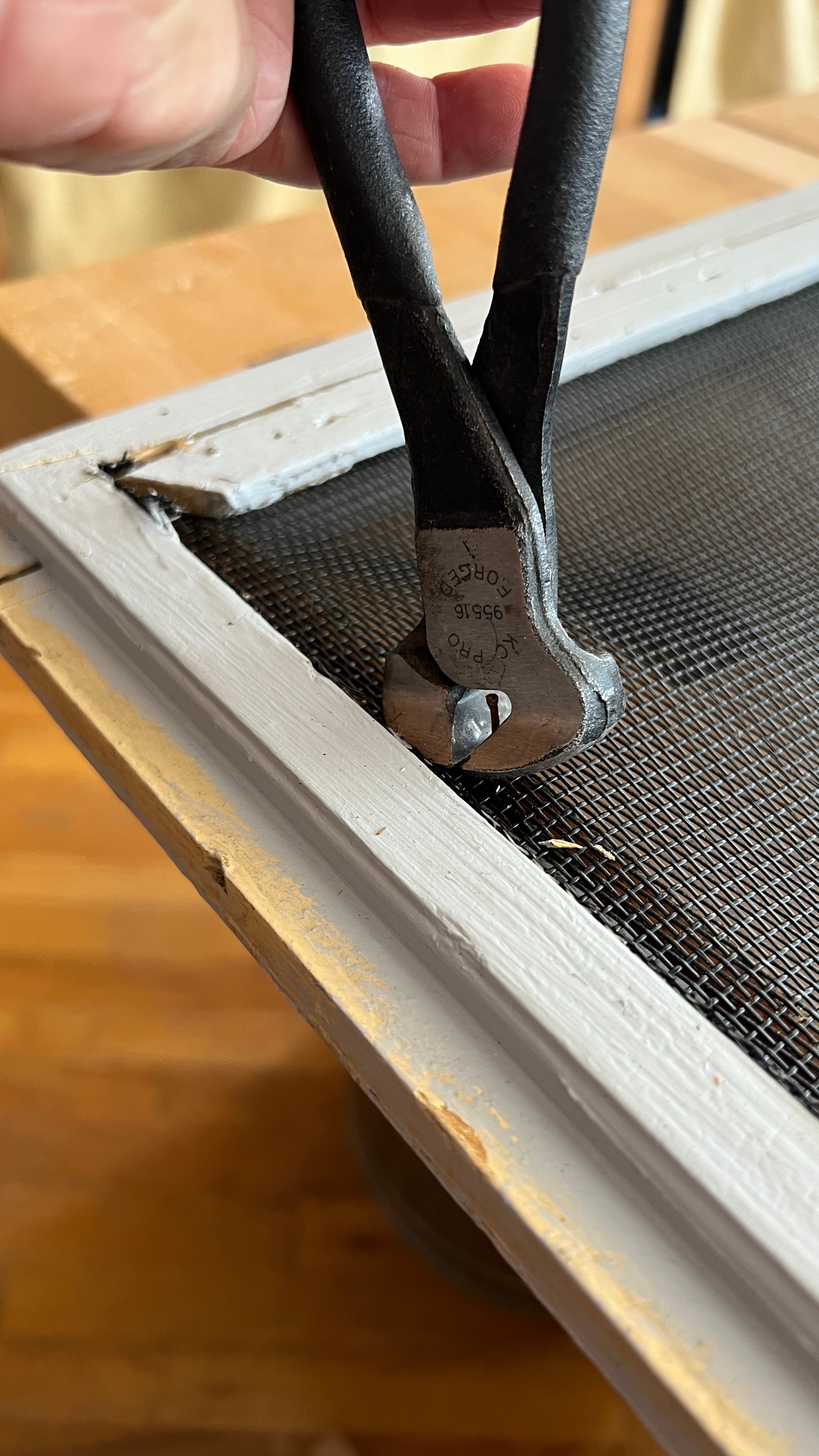
I don’t have a particular brand of end nippers to recommend, because the ones I borrowed from Chris’s tool chest (thanks, Chris), as well as the vintage forged farriers’ pliers that I use at home for pulling nails, aren’t available at your local hardware store.2 But a pair of nippers – actually, several pairs in various sizes from ~5" to ~9"or so – are handy to have on hand. This is particularly true if you use nail guns, which have been known to shoot not-straight (I blame the nail or the wood – not the operator!) or to hit a knot and come out the side of a piece. Nippers with a rounded bevel are the best tool for removing an errant nail without damaging the wood around it (much). And they are, of course, good for repairs should you need to pull an old nail.
Nippers have (or should have) sharp tips to nip off the end of a nail or wire – so if I’m using them to pull a nail, gentle pressure is key; exert just enough to grip, not enough to cut. But sometimes I do need to cut off the end of a nail when it just won’t budge, or when pulling it will wreak too much damage on the wood around it. Then, I simply squeeze harder to cut it (larger nippers are usually my go-to for cutting), and gently sink the remaining sharp end flush to or just below the worksurface with a nailset.
If I were to buy nippers now, I’d probably get the Knipex brand, based on my electrician’s recommendation.
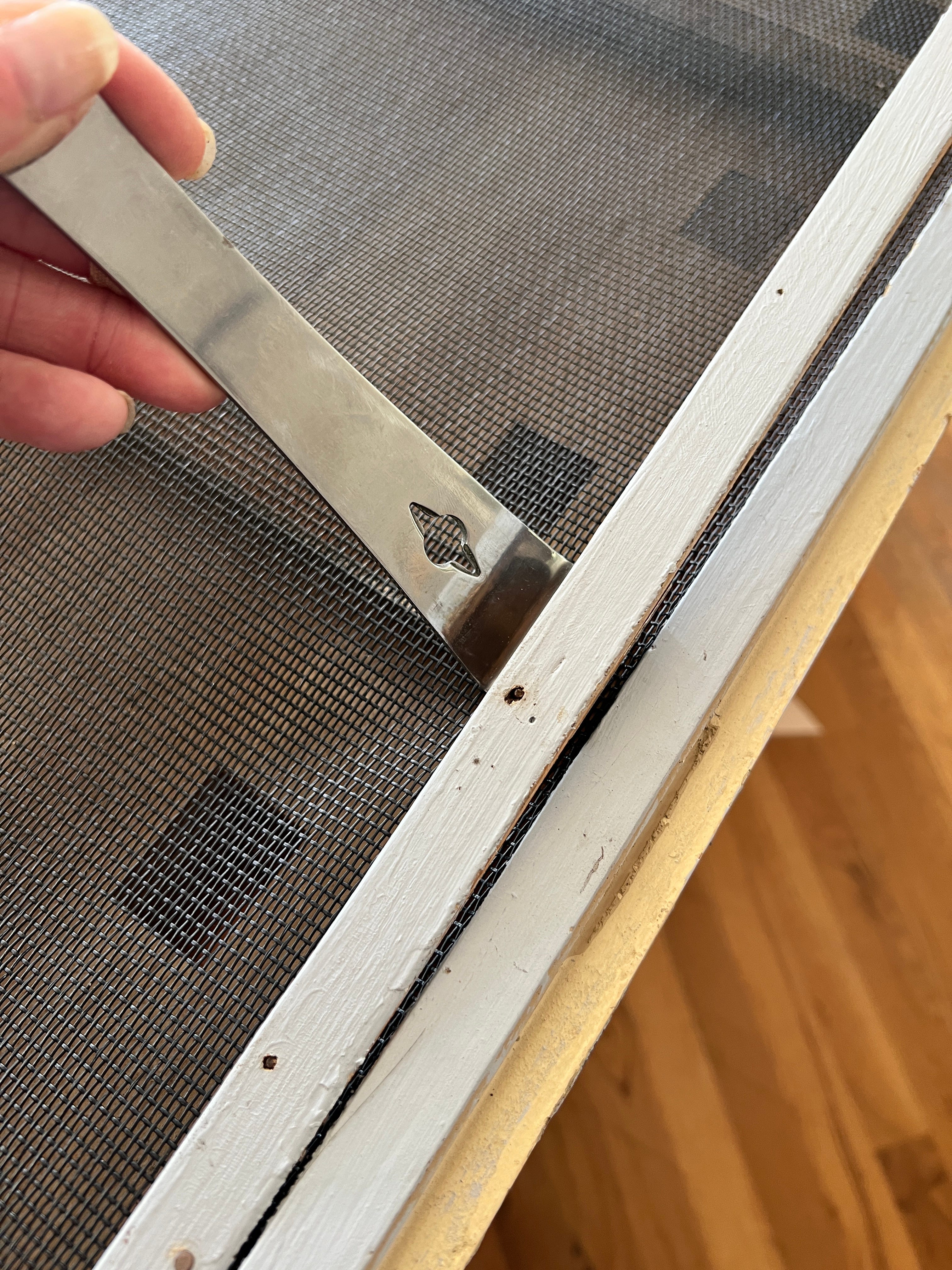
On the pry bar, the $9 9" GRIP Stainless Steel Pry Bar is the way to go – and get the 6" while you’re at it. The two together are great to have for safely removing small mouldings (lever gently at both ends with the two tools so nothing snaps), and for prying apart pieces that didn’t go together quite as you’d planned – say if you glued and nailed a moulding in place … but it wasn’t actually in the right place. A thin pry bar can save your butt without introducing damage.3
For my screen door insert, the damage was already done – so I rudely jammed the beveled end of the pry bar underneath the broken bits then levered them out. They did not break further … but that was sheer luck, because I did not go gentle into that fight.
In short, if you build stuff, you also have to sometimes unbuild stuff, and these two tools – nippers and a thin pry bar – are key to that work.
I also didn’t think to tell them to avoid the original casement windows on my third floor storage room that are insufficiently latched – a problem I’ll be fixing later today. So those blew open and I ended up with water all over my off-season clothing and the floor. Good thing I can wash the clothes, and the floor probably needed a good clean anyway!
Chris here: The nippers are the KC Professional 95520 8″ End Nipper. You can still buy them here and there.
Your basic 15" utility pry bar is great for larger-size work and good to have around, but the metal on these prosaic tools is a bit too thick in my opinion for furniture-sized work. Unless your goal is its total destruction.
I’ve used 12 inch and 8 inch Japanese-made cat’s paws for disassembly requiring care for near 20 years. I’ve found both indispensable.
Available from Lee Valley: https://www.leevalley.com/en-us/shop/tools/hand-tools/pry-bars/32014-restorers-cats-paws
And +1 for the Knipex nippers.
2 pry bars, or nippers plus pry bar, can be a useful combo for avoiding wood damage - put the "passive" pry bar between the "active" one and the work surface and you can pry much more aggressively with less fear of marring the work - it distributes the pressure, similar to how you use a scrap of wood with a holdfast or vise jaw at the bench