


I’m in the midst of revising “The Anarchist’s Tool Chest” for its 15th anniversary, and I’ve tripped over a small pothole in my path. At first things were easy. It took a couple months to revise my recommendations for hand tools in the book, and I’m pleased with the end result.
But there’s a short chapter on woodworking machinery in the book that has crippled my progress. The problem is that I don’t look at machinery the same way I did when I wrote the book in 2010.
In 2010, I was satisfied with buying a brand new portable planer or band saw from my local dealer. When you do this, you have a warranty, the support of the dealer and there’s an excellent chance you can get the machine set up and running in a couple hours.
These days, I vastly prefer old machinery to new machinery. I’m not going to say that new machinery has gotten universally worse in the last 15 years. There are still lots of manufacturers who make good machines.
Instead, I’ve realized that the older machines are both better and (usually) far cheaper than new machines.
Case-in-point: Two years ago we needed to replace our lathe. We had a decent one in the shop, but it was a loaner and needed to go back to its owner. My first instinct was to buy an American Beauty lathe from Robust. It was the only model that really ticked all the boxes for me on durability and quality. Price: About $10,000.
Then I found a vintage Powermatic 90 lathe that had been upgraded with electronic variable speed. Price: $3,000.
I bought the Powermatic after a heartbeat.
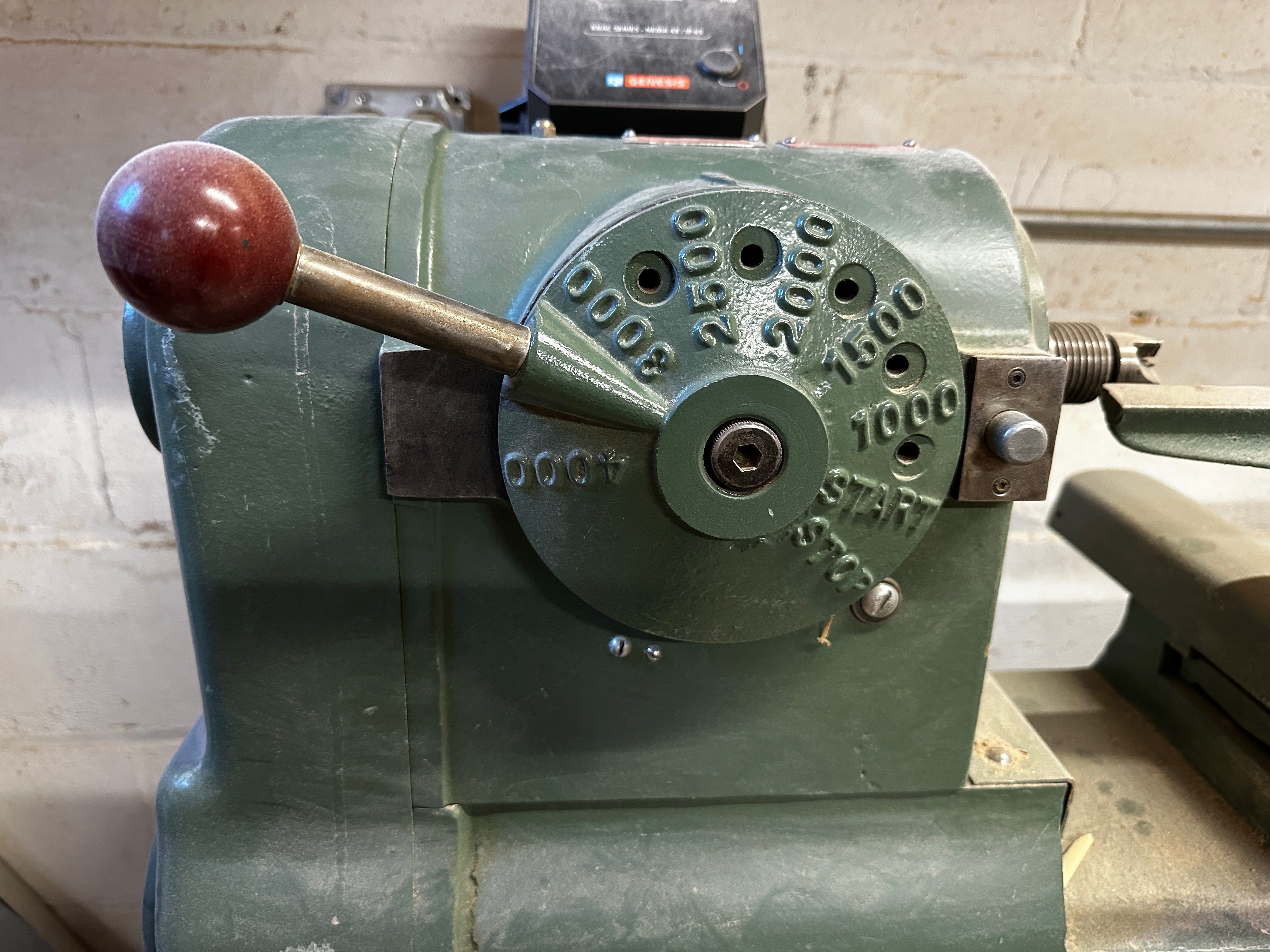
These days, about half the machines in our shop are vintage. The other half were built for metalwork instead of woodworking (metalworking machines are more heavy duty).1
And then there is our Saw Stop, which I bought new.
The only reason I own a Saw Stop table saw is because of its safety equipment. Compared to the U.S.-made Unisaw and Tennessee-made Powermatic 66 I used for most of my career, the Saw Stop might as well be a plastic toy.
Table saws eat fingers – for three meals a day. A lot of friends have been maimed by table saws (not me). So it’s simply foolish to buy anything else but a Saw Stop.
But otherwise, I prefer vintage machinery. Mostly stuff made between 1950 and 1995 in the United States. I know some people will disagree, but I consider this the golden era for woodworking machinery.
The stuff made during this 45-year period was the culmination of designs that emerged during the early part of the 20th century. By 1950, woodworking machinery had been perfected – like the tilting arbors and trunnions on table saws. The guides on band saws. The stops and pulleys on drill presses. And especially the sealed bearings on every machine.
The machines were simple, heavy and entirely made of metal and rubber, with almost no cheesy plastic parts.
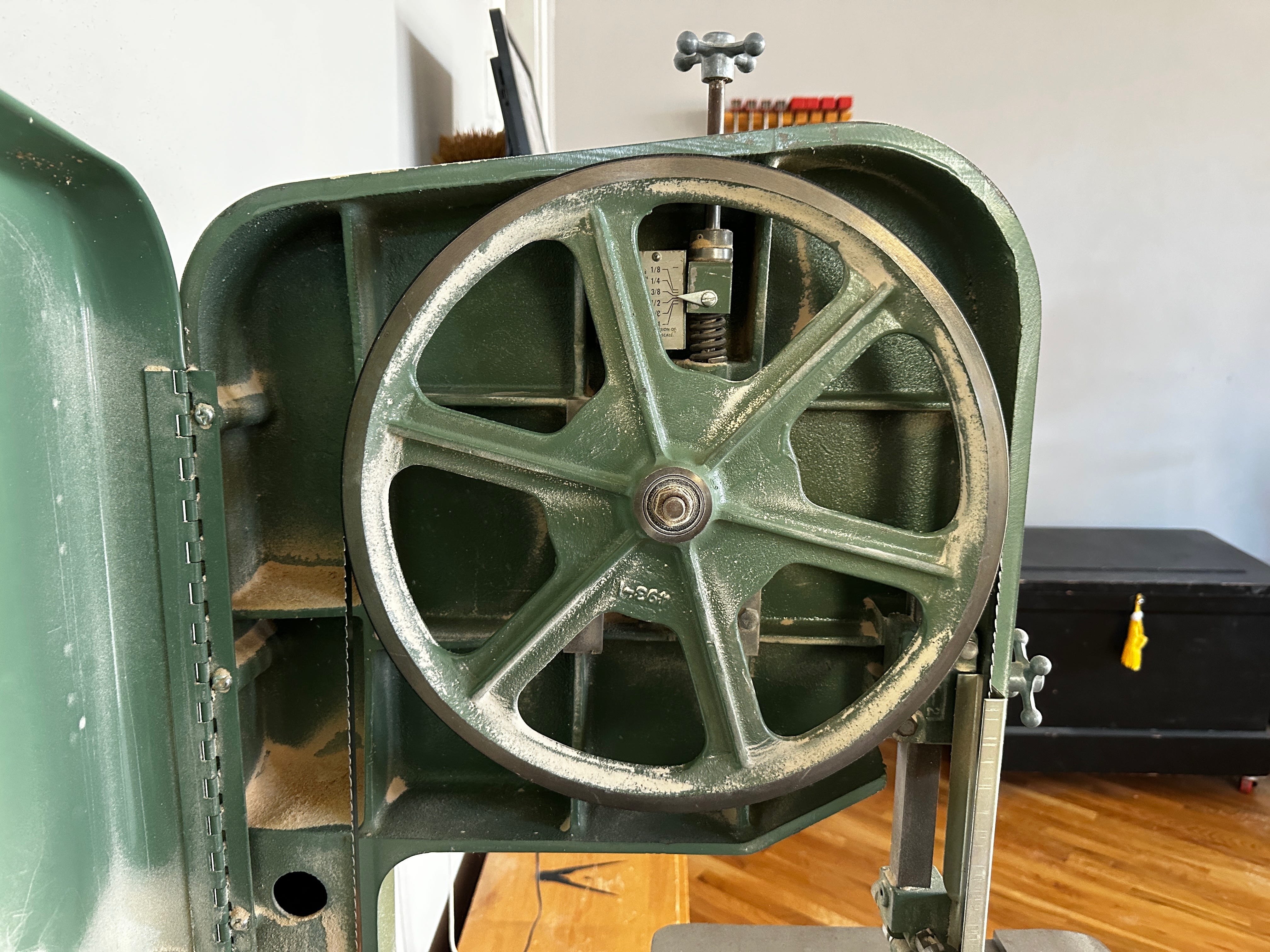
And for us – the people in 2025 – these machines are still virtually brand new. They were designed to last 100 years in an industrial setting. I consider them an incredible value.
But, you might be saying, won’t I need to first learn to restore this kind of machinery? Won’t I need to become a grease monkey to get these machines working? Won’t this cut into my time making furniture?
My answer is: No, not really.
For the most part, these machines are dirt simple. They are made up of a motor, pulleys, belts and shafts. The electrics are stuff you learned in 8th grade (at least at my Arkansas school). So, wrenches, screwdrivers and a socket set are the only tools you need to work on these machines.
That is, if they even need work. For the most part, they need only a little work. And you can learn as you go.
During the last 25 years I’ve worked on hundreds of woodworking machines, from brand new Taiwanese stuff to vintage American iron. So I can say the following with zero qualifications: I will always choose vintage American iron to almost anything else.
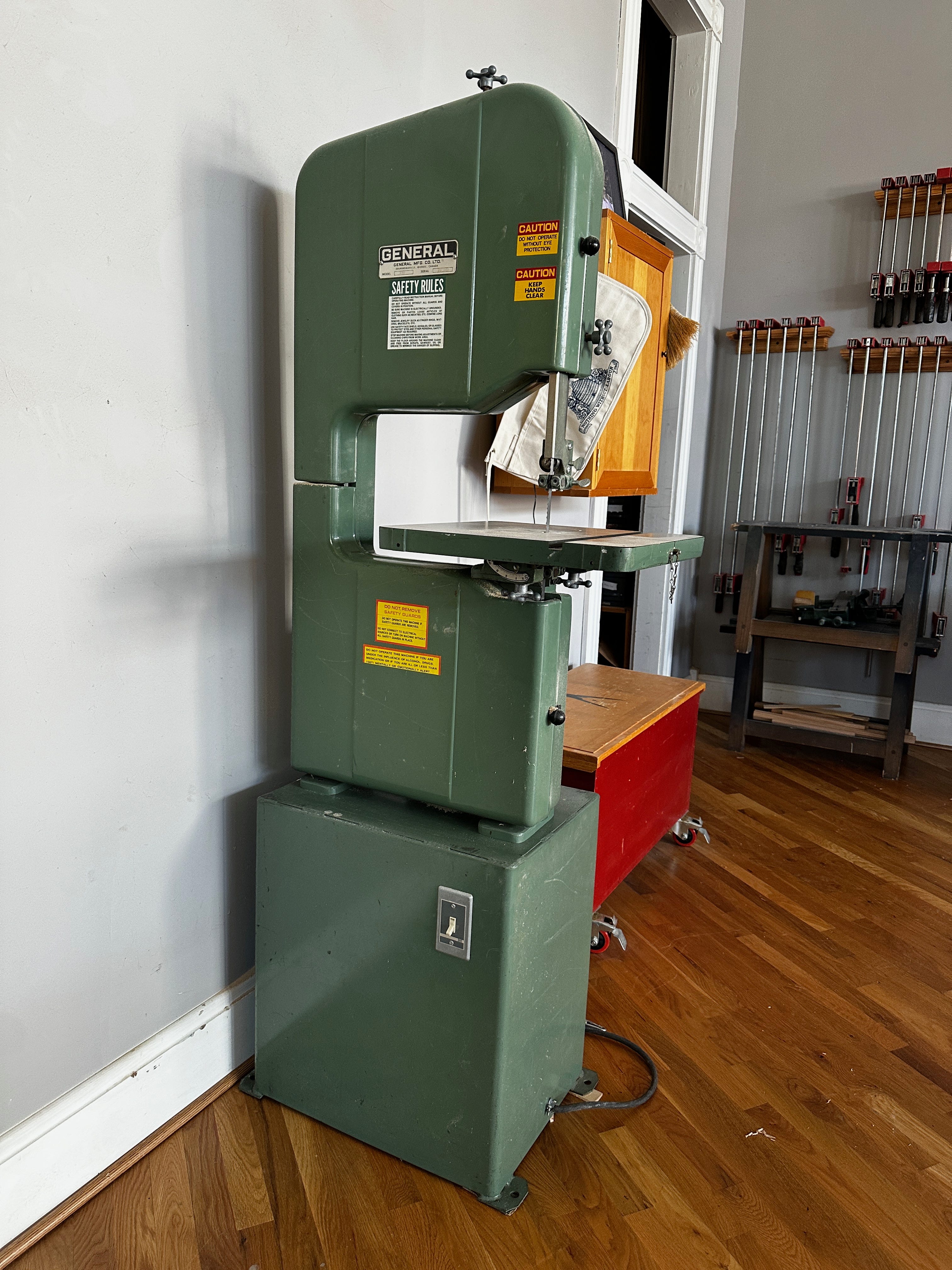
Recently I bought a General 490 15" band saw for the shop that was built in the late 1980s. I’m the third owner, and the saw has seen a lot of use. (When I bought it, the owner was using it to cut firewood….)
All the saw needed was a little cleaning, adjustments and a new V-belt. After that, it ran like new.
But what if you aren’t as lucky? What if your band saw needs more work?
I think it’s worth it. The simple repairs and maintenance will educate you and make you a better machine operator/owner.
The other vintage band saw we use is a 1980 Rockwell/Delta 14" band saw. When I bought it, it was new in the box and had been sitting in the basement of a Chicago hardware store for 25 years.
The tires suffered from dry rot, so I learned to replace them. The pot metal pulley on the motor cracked, so I learned to replace it with a nice, machined pulley. All these repairs were easy and obvious. And the work put me in touch with how the old machines function.
So let’s talk about buying this stuff.