

Premium Coping Saws

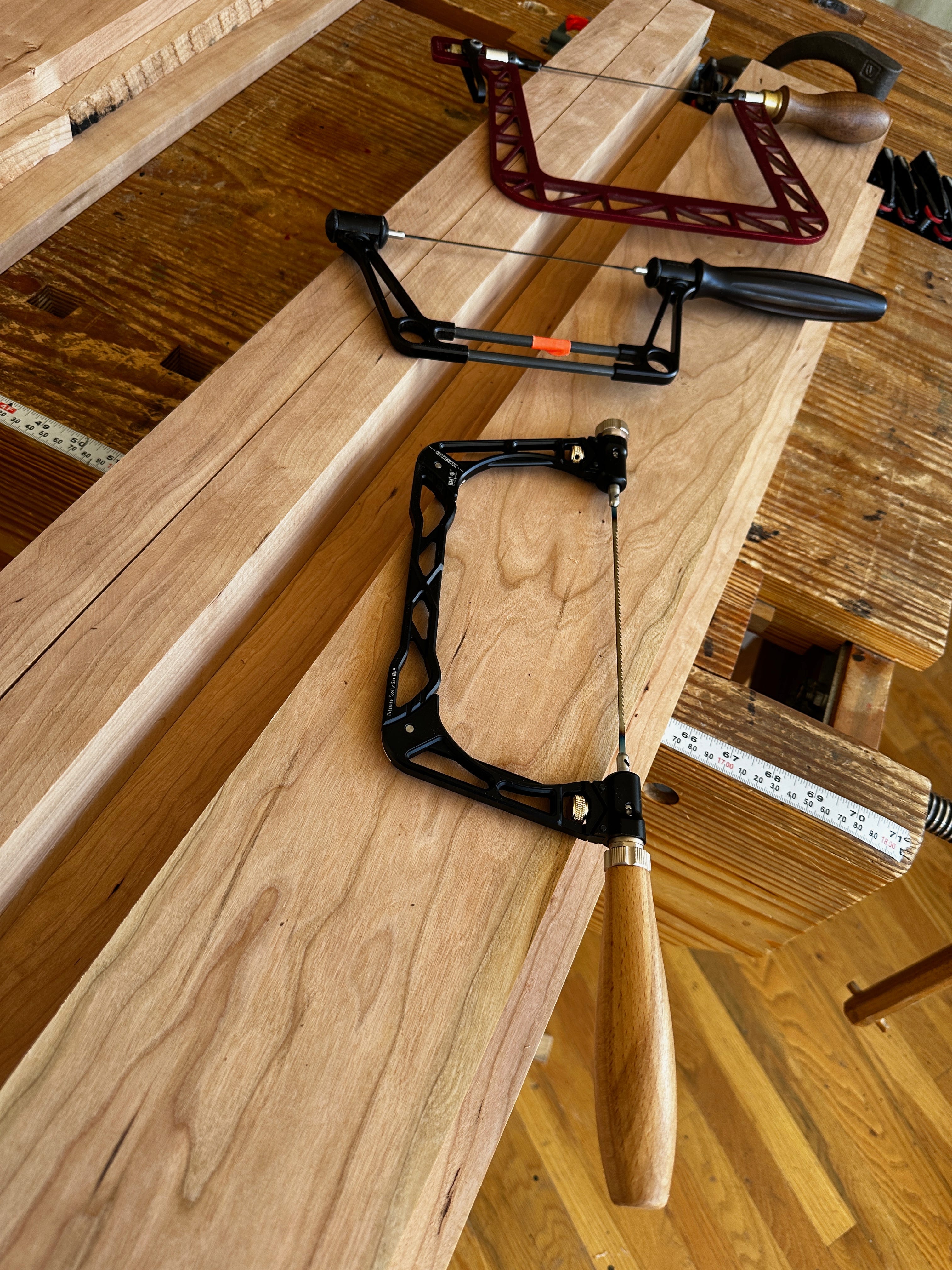
Before picking apart a bunch of expensive coping saws, I think you first must ask: Should these tools even exist? After all, the world functioned fine for 150 years or more with inexpensive and simple coping saws.
Unfortunately, the cheap coping saws have gotten worse. Their frames won’t hold the blade’s rotation or tension, and so you do more cursing than cutting. Years back when Olson made coping saws in Germany, the tools were excellent and inexpensive. Now they are made elsewhere and are merely inexpensive.
We have some vintage coping saws in our shop from Disston and Eclipse. They work OK, but they are ragged out from decades of use. (If you want to know which cheap saw we prefer, Megan wrote about those here.)
All this is to say: I’m glad that modern toolmakers are trying to make a better coping saw because we need and deserve one. Which one you choose depends on how you feel about copycats or your needs as a furniture maker. Let’s look at the three big ones in the order in which they appeared on the market.
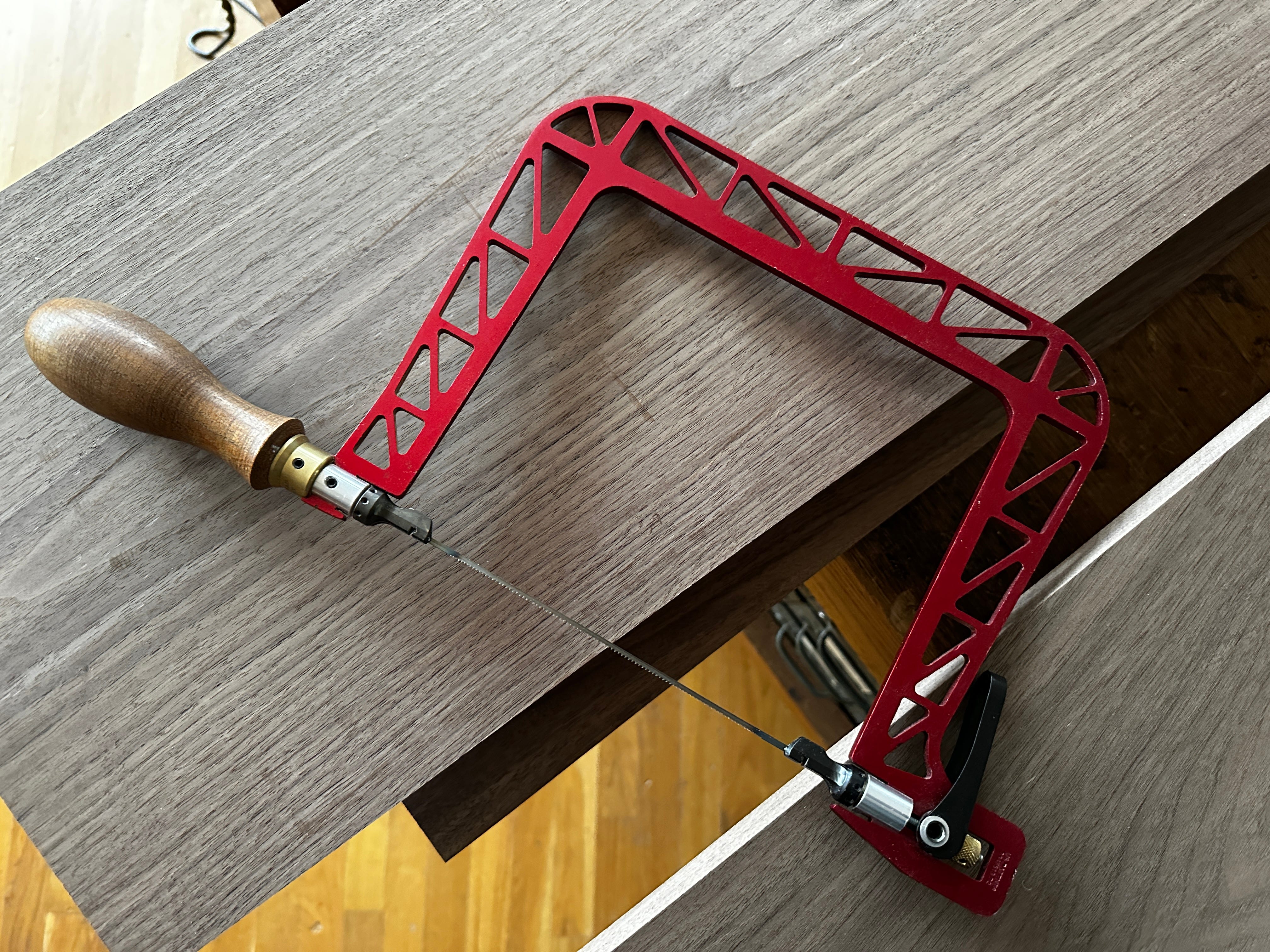
Knew Concepts was the first modern toolmaker to redesign the old form of coping saw. And it was a huge improvement (except for the handle). You tension and de-tension the blade with a lever. The blade holders lock in detents to keep the blade at the correct angle. And the aluminum frame is light.
On the downside, the saw is bigger than I like. It’s also heavy at more than 13 ounces (because of its size). The blade holders get gummed up with sap and require cleaning. And you can’t do scroll cuts with the blade rotating freely (something that newer coping saws do).
The Knew Concepts is made in the USA (yay!) and offers excellent customer service. If you don’t do a lot of decorative scrollwork and are mostly clearing waste from dovetails, this saw is a fine choice.
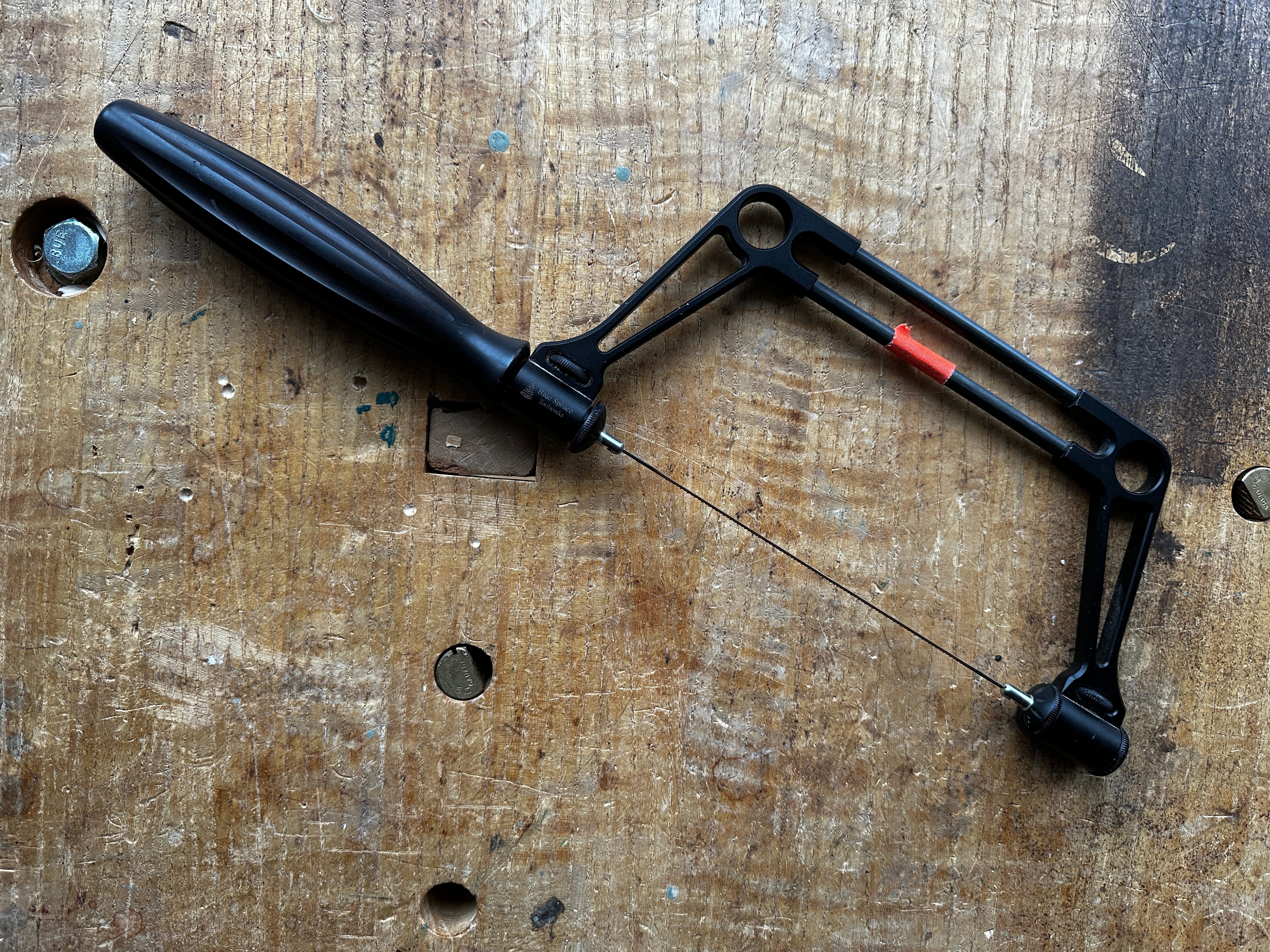
Dave Jeske at Blue Spruce Toolworks took the next giant leap with his coping saw. It’s smaller, uses carbon fiber to keep the weight down (at 9.6 ounces), has the best handle of any coping saw ever made and allows you to unlock the blade so it rotates freely while the blade is in tension. This somewhat miraculous feat allows you to cut in all directions while scrolling while the frame swivels out of the way freely.
Then Dave sold Blue Spruce to Woodpeckers (he’s still a consultant). They kept the saw in production in the USA for a while and changed the way the handle attaches to the frame for the worse (Megan’s came unglued). And now Blue Spruce doesn’t make the tool anymore.
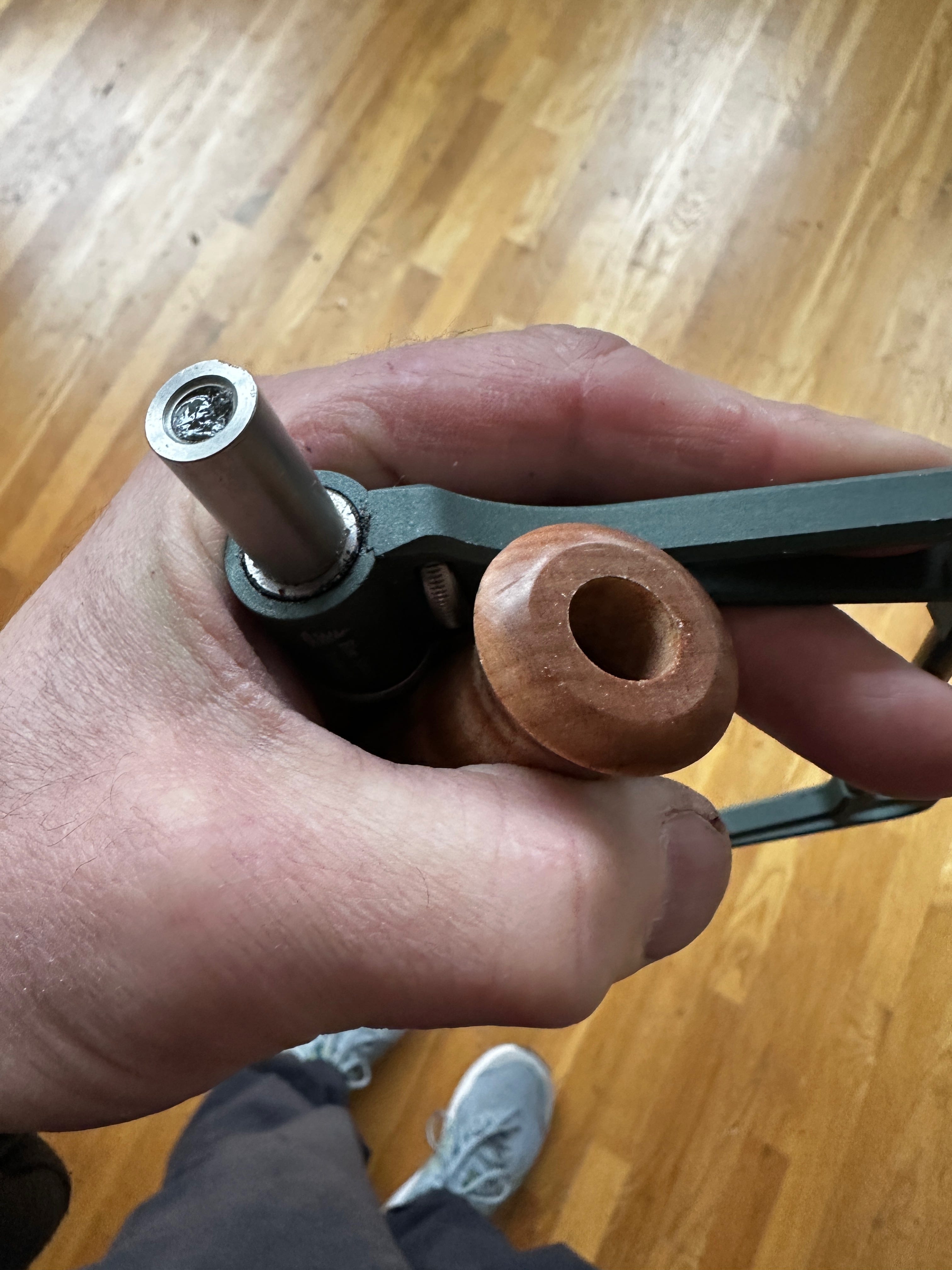
So why talk about it? Because a lot of Dave’s ideas were picked up/borrowed/you-decide-the-word by Katz-Moses Tools for a coping saw that was recently released. The KM-19 is made in China, which is not my favorite thing when it comes to tools.
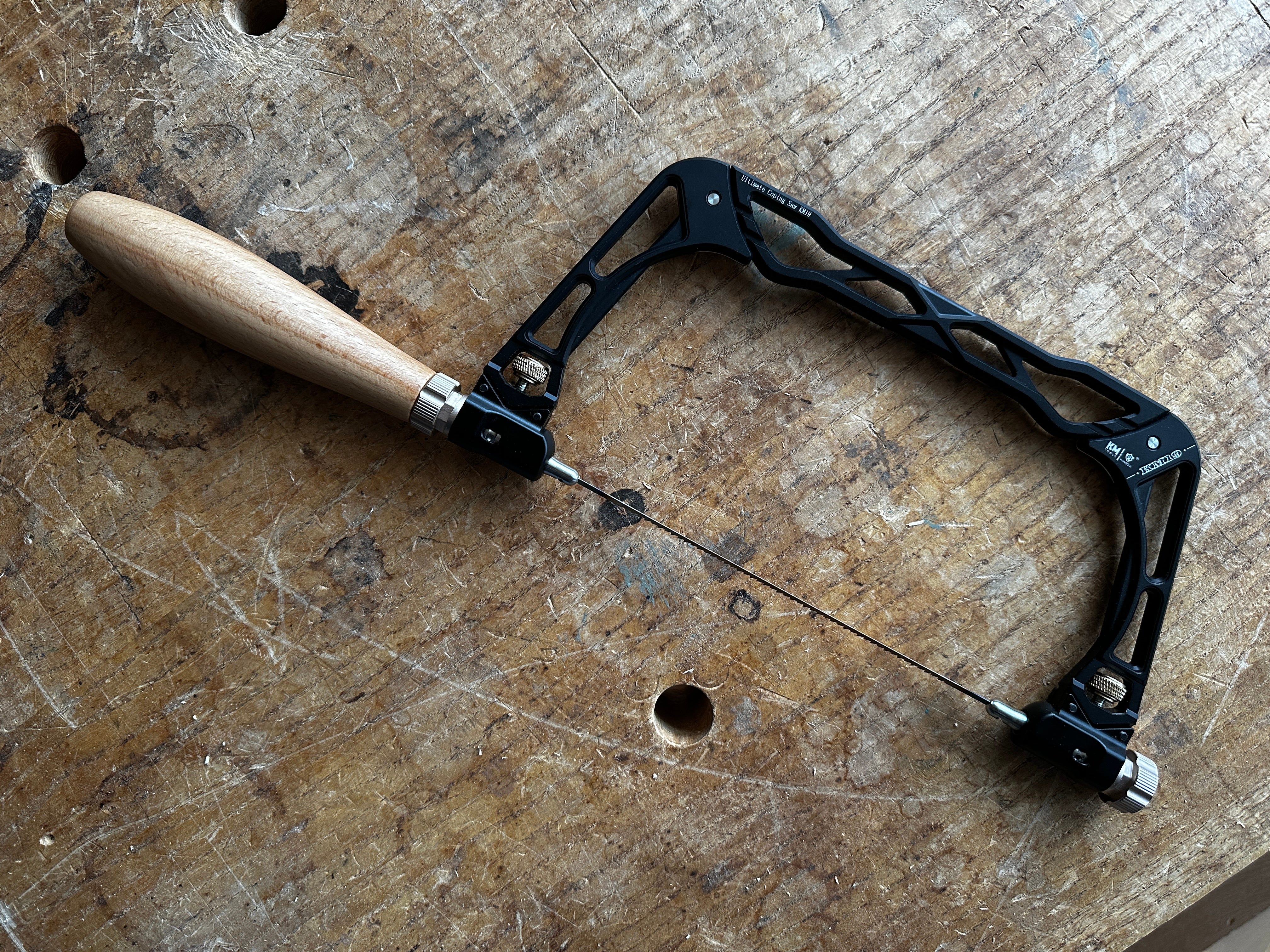
But we bought one (full price, etc.) to give it a fair shake. After all, the Blue Spruce is out of production.
The KM-19 is well made, with the metalwork on par with the Blue Spruce saw. The frame is aluminum (no carbon fiber) and the tool is just as light as the Blue Spruce (9.2 ounces). The KM-19 is more toe-heavy than the Blue Spruce because there is more brass and steel up at the toe. So the KM-19 feels heavier in the hand, even though it isn’t.
Keep reading with a 7-day free trial
Subscribe to Never Sponsored to keep reading this post and get 7 days of free access to the full post archives.