

Flush-cutting Saws that Work

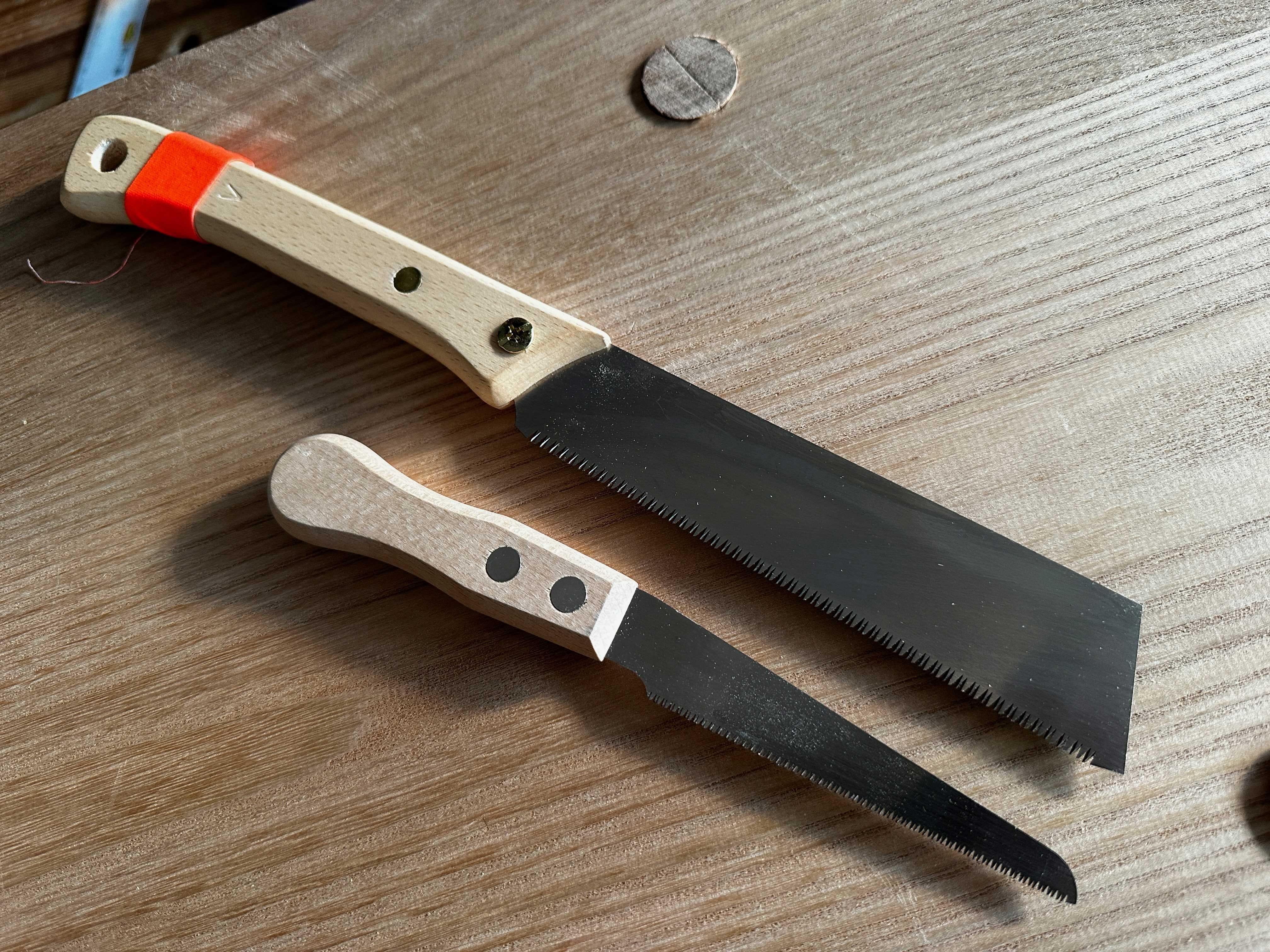
Because I’m a chairmaker, I’ve been on a decades-long quest for good flush-cutting saws. A chair can have as many as 20 through-tenons that need to be cut close.
I have tried more than a dozen saws, from a $300 handmade one (too fragile for my work) to the home-center ones (worthless). During the last 10 years, I have settled on two saws that work quite well (if you know a trick) and they don’t cost much.
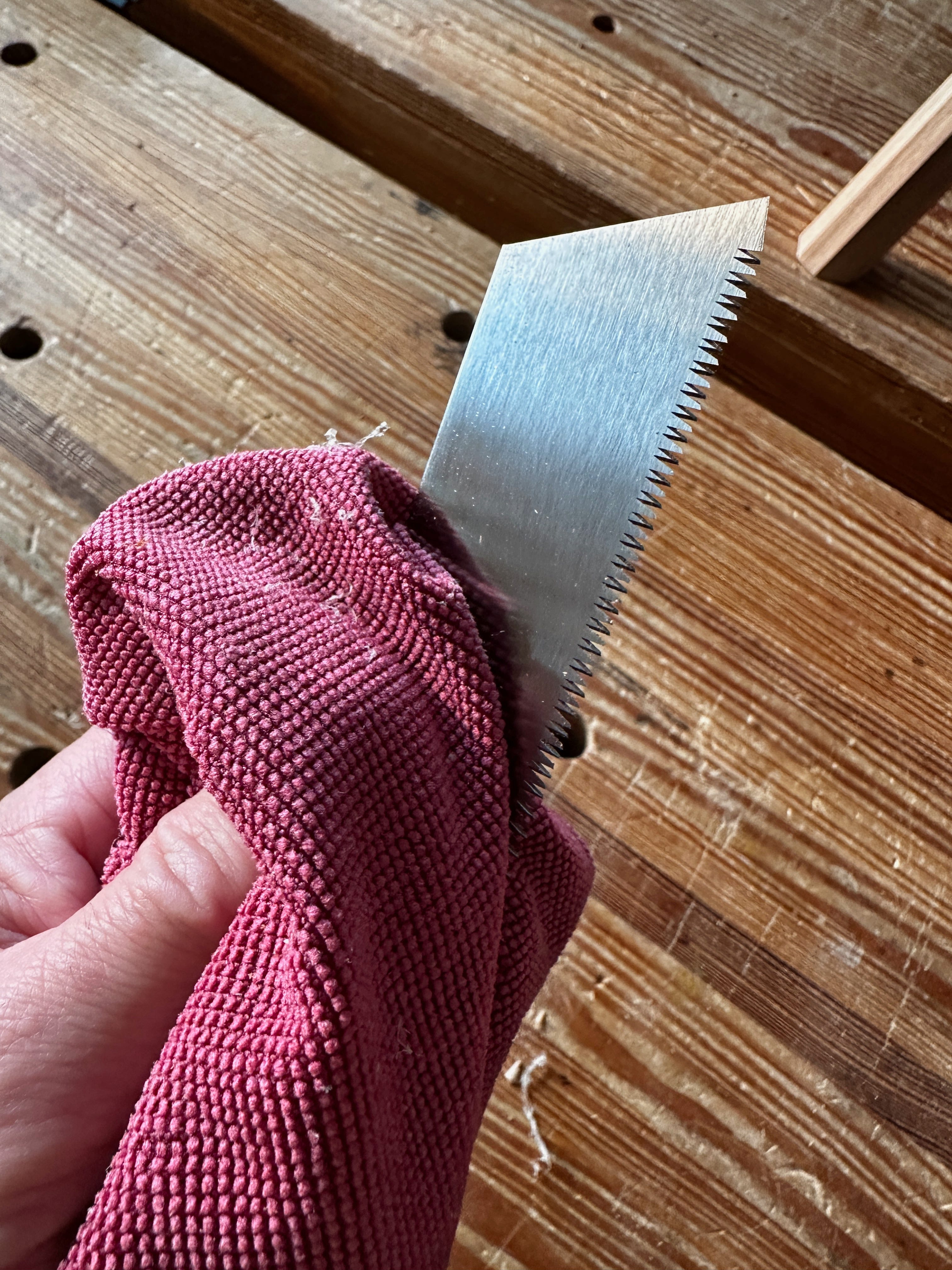
I’m not a tease, so here’s the trick. You must wipe the blade with an oily rag after each and every cut. The blades have zero set, so as soon as they heat up in the kerf, everything gets jammed up. A thin coat of oil allows the blade to pass.
One more thing before we discuss the saws that I use. I don’t recommend flush-cutting saws that have teeth on both long edges of the blade. If your saw steers slightly off level, the trailing teeth will scar your work – and badly. Stick to the single-edge tools. (You are also less likely to cut yourself. There’s a reason we call these the “flesh-cutting saws” in our workshop.)
Japanese Kugihiki Saw
This saw from Lee Valley is what we use for heavy chores, such as cutting 1"-diameter oak tenons flush. It has deep gullets and a handle that assists you in the pull stroke. The blade is fairly stiff at 0.02", so it’s unlikely to kink, and its teeth are unlikely to break. These features make it ideal for classroom work because students are hard on tools.
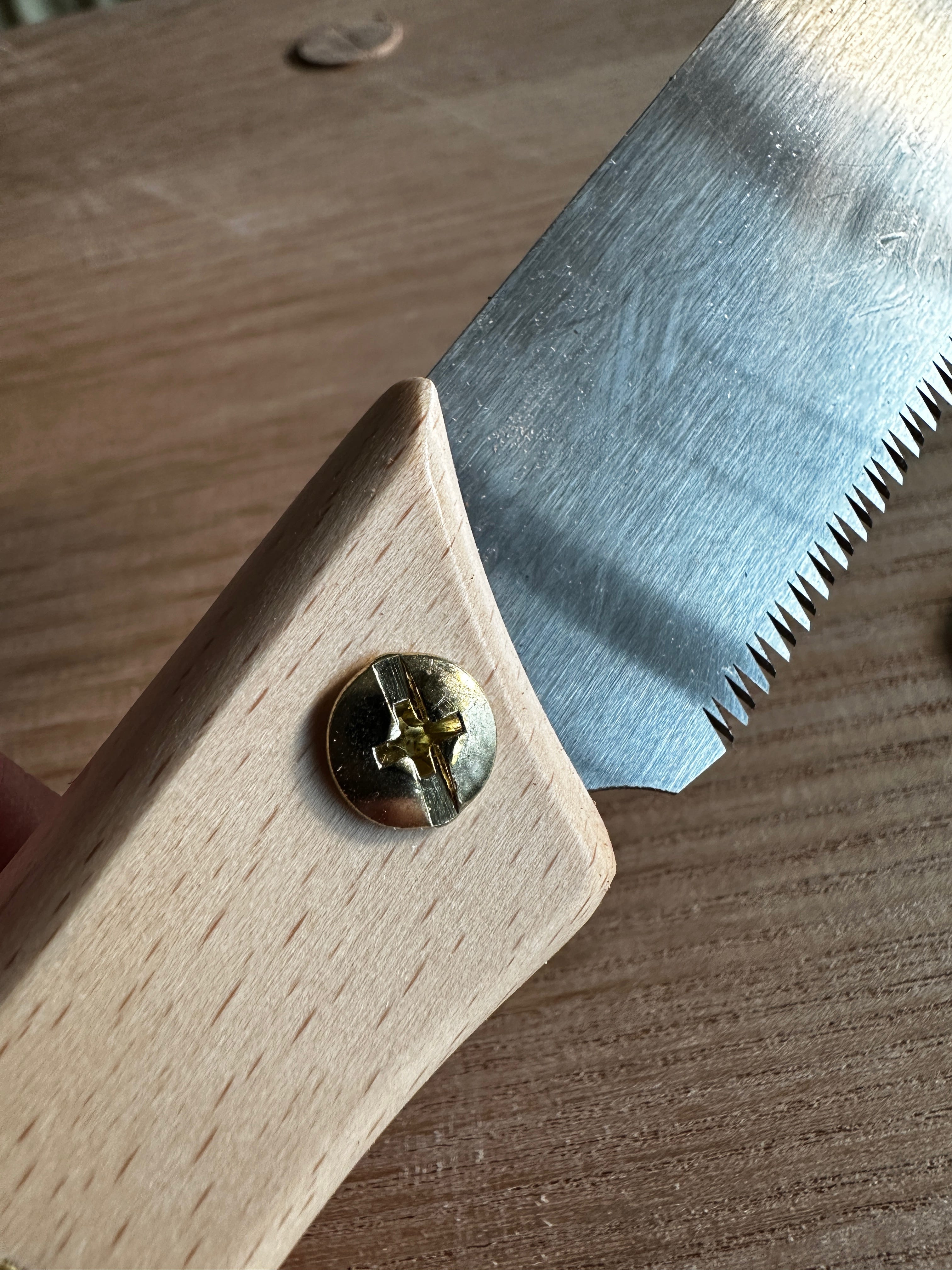
The blade is replaceable. So when you buy the saw, get a replacement blade as well.
As with all saws, how you store the tool is important. This saw isn’t supposed to knock around in your tool chest. It’s too fragile. It comes with a hang hole, so use it. I keep mine in a rack in my tool chest among some wider chisels. This makes it harder for my students to find (a good thing). So they then use the decoy student saw (it’s the same saw – just broken in by students) hanging on the tool wall.
If you take care of this saw it will last many years before becoming dull. Keep the teeth clean of glue using hot water or vinegar.
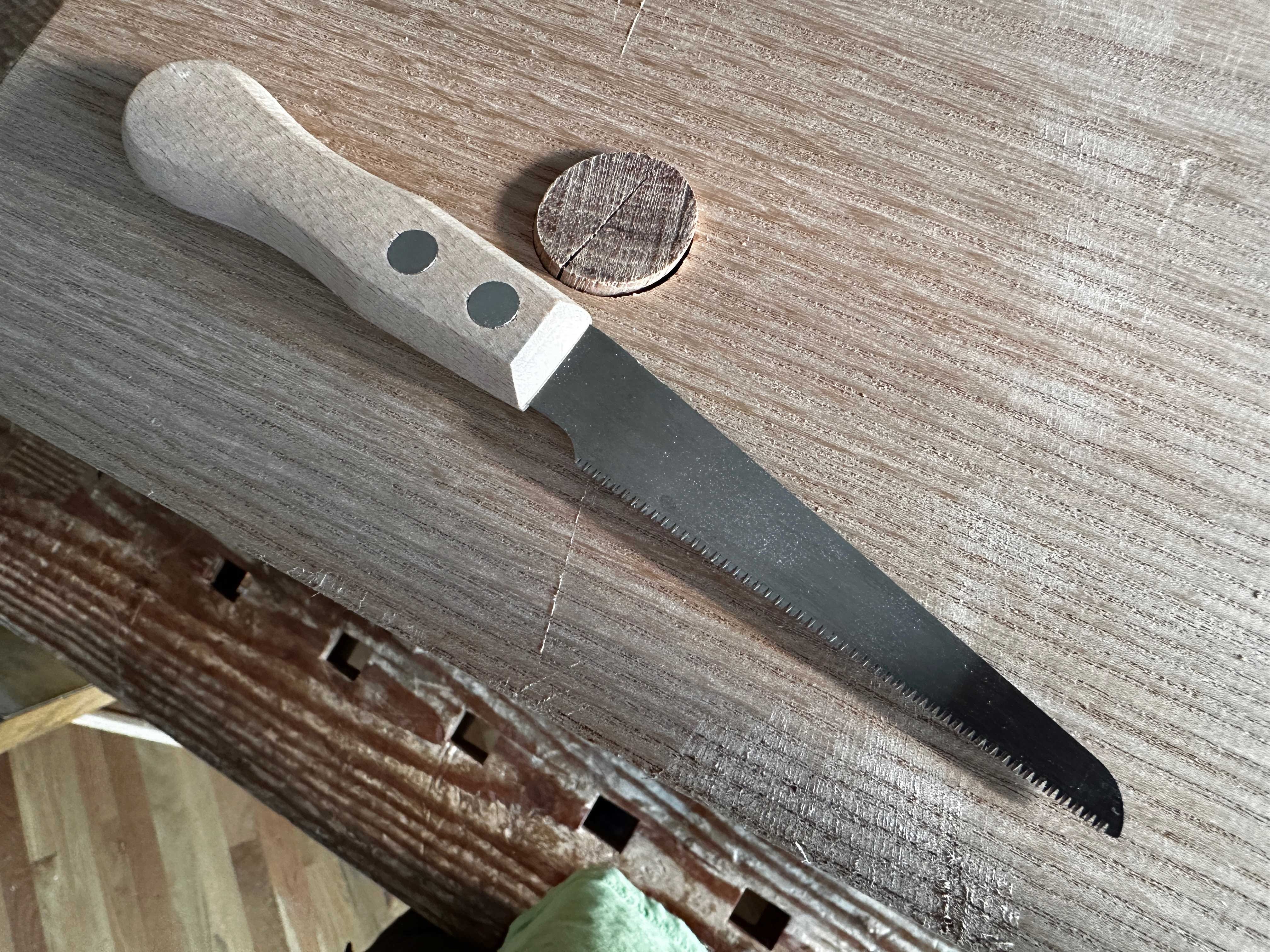
Gyokucho #1150 Saw
This little guy is outstanding for fine work. The blade is shockingly thin at 0.01", with needle-sharp teeth. Because the blade is thin, the teeth are fragile. So handle the saw with care, keep it wiped down with oil and store it in the plastic tube it’s sold with.
The blade is not replaceable, but that’s OK because the saw is reasonably priced. It’s also available from Lee Valley Tools, but you have to dig a bit to find it.
More times than I would like I have cut myself using my flush cut saw. Any tips on hand placement?
Thanks!
They are both excellent saws. Years ago I had a very pretty flush cut saw from a British maker. I think it's still available. But it kinked horribly after a very short time.